


Safeguarding failures over many years laid the foundations for the severe abuse experienced by Sara Sharif that culminated in her murder by her father and stepmother, a case review has concluded.
The child safeguarding practice review into Sara's death, in August 2023 in Woking, Surrey, detailed systemic and practice failings in multiple services' engagement with the family, dating back to 2010, before Sara was born.
The review, for Surrey Safeguarding Children Partnership, said there were several points during Sara's life where different actions should have been taken by Surrey County Council and other agencies to protect her.
Practitioners 'need to think the unthinkable'
It said the case demonstrated the challenge facing practitioners in understanding risk where information, including from the past, was held by separate agencies. But it stressed that it also highlighted the importance of professionals being prepared to "think the unthinkable" about the potential of parents to harm their children.However, the report firmly attributed responsibility for the 10-year-old's death to her murderers - Urfan Sharif, her father, and stepmother Beinash Batool - as well as Sara's uncle, Faisal Malik, who was convicted of causing or allowing her death at the trial last year.
Authors Jane Wonnacott, a social work consultant, and Russell Wate, a retired detective and child deaths investigator, said that Sharif, who had a long history of committing domestic abuse, groomed and manipulated those around him, including professionals, while Batool was capable of inflicting serious harm on children in her care.
Case chronology
- 2010 - family becomes known to Surrey children's services and Sara's older half-sibling and sibling are put on child protection plans following reported domestic abuse by Urfan Sharif, who is from Pakistan, towards their mother, who is Polish. Surrey Police disclose to children's services that Sharif has two previous allegations of false imprisonment of women.
- 2011 - after the first plan ceases, children are placed on another plan following further reported domestic abuse by Sharif, and Sara's older half-sibling turning up to school with a bruise on their head, which they attributed first to Sharif and then to their mother.
- 2012 - following further allegations of serious domestic abuse, and physical abuse of Sara's half-sibling, by Sharif, Surrey council applies for interim care orders with a plan to separate the children from their parents.
- 2013 - Sara is born in January and the council seeks an interim care order with a plan for separation for her. However, by the time of the hearing, it is seeking interim supervision orders, with 12-month supervision orders granted in September following further alleged abuse by both parents. In line with practice at the time, the child protection plans cease on the granting of the supervision orders.
- 2014 - Surrey applies again for interim care orders for all three children after Sara's half-sibling reports being bitten by their mother. However, it is agreed in court that Sara and her sibling will stay at home, while their half-sibling moves into foster care.
- 2015 - Sara moves into a refuge with her mother in Hampshire. A care order by consent is made for Sara's half-sibling, while the council makes a plan for adoption for Sara and her sibling in view of the concerns about both parents. However, the children's guardian's view is that was that the mother's separation from Sharif is a protective factor. After a further parenting assessment concludes that the mother can provide safe care, and after taking further legal advice, the council amends its plan to a supervision order, which is agreed. The children are placed on child in need plans. Also, it is agreed that Sharif will only have supervised contact and will attend a domestic abuse perpetrators programme. He is now in a relationship with Beinash Batool.
- 2016 - Batool gives birth and the babies are placed on child protection plans due to Sharif being a perpetrator of domestic abuse. Sara's mother moves from a refuge to her own property in Hampshire. The supervision orders for Sara and her sibling lapse and Surrey closes the case due to positive feedback from the contact supervisor about Sharif. However, the perpetrators programme shares that he has self-reported several instances of high-risk domestic abuse and has not taken responsibility for his actions.
- 2017 - Sharif is now having unsupervised contact with Sara and her sibling. Though this has been verbally agreed by Sara's social worker, it was not based on any assessment. The child protection plans for the babies cease and the case is closed.
- 2019 - While Sara and her sibling are staying with Sharif, he tells Surrey's emergency duty team that their mother has physically attacked them and they do not want to return to live with her. Hampshire County Council contacts the mother, who says she hit Sara, is struggling and that it would be better if the children stayed with Sharif. Sharif and Batool apply for child arrangements orders for the children. The private law case is heard by the same judge who heard the previous care proceedings. The judge orders a section 7 report on the children's welfare from Surrey council. This is carried out by a social worker on their assessed and supported year in employment (ASYE) scheme, who is told, consistently, by the children that they have been abused by their mother. The social worker does not see the prior safeguarding letter by Cafcass, which details the father's domestic abuse history. The report concludes that the children seemed well cared for by Sharif and Batool, who are then granted child arrangements orders, with their mother allowed supervised contact.
- 2021 - Sara, now eight, starts wearing a hijab, following a family trip to Pakistan, despite no other family members doing so. The school is told that it is Sara's choice, however, the review found that it hid bruising and injuries to her face and head.
- 2022 - Sara's school notices a bruise under her left eye, which she says has been caused by a younger sibling, an account endorsed by Batool. The school accepts this and does not refer to children's services. Batool has another baby and later in the year, Sara's uncle, Faisal Malik, moves in, leaving three adults and six children in their two-bedroom flat.
- March 2023 - Sara's school notices three separate bruises on her face, which the girl attributes to her sibling punching her. It sends a referral to Surrey council's front door service (C-SPA), triggering an enquiry by a social worker. This is shaped by the facts that Sara has not made an allegation against her adult carers and there has been no local authority involvement since 2019. No checks are made with Surrey Police and Sara's school is not contacted. Sharif tells the social worker, falsely, that marks on Sara are due to care she received after being born prematurely. No further action is taken.
- April-August 2023 - in April, with the family having moved to a larger house, Sharif tells Sara's school that he intends to home educate her. Because of past concerns, the school contacts C-SPA but is told to re-refer only if there are concerns of immediate risk of harm. The elective home education (EHE) referral is sent to Surrey council's inclusion team, which approves it in June after an officer speaks to Sharif and carries out checks to confirm Sara is not open to children's social care. On 7 August, the council's EHE team carries out at a home visit but goes to the family's old address. After the mistake is recognised, a further visit is scheduled for September. However, on 10 August, Sara is found dead at the family home.
Findings and recommendations
The review made seven key findings and 15 recommendations:- Front door services: it found that Surrey's front door did not identify that Sara was at risk of abuse, information was not adequately triangulated and her voice was not heard. It called on the Department for Education (DfE) to issue practice guidance to ensure front doors routinely evaluate whether a child is at risk of abuse and any bruising is properly assessed. It also said the Child Safeguarding Practice Review Panel should produce good practice guidance on front doors, including in relation to resourcing, staffing qualifications and experience, management and supervision.
- Elective home education: when she was withdrawn from school, there was no requirement for a formal discussion between parents and professionals despite the family's history of extensive involvement with statutory services. While the Children's Wellbeing and Schools Bill would require parents to obtain council consent to home educate a child subject to a child protection enquiry or plan, this would not have applied to Sara. The review called on the DfE to update statutory guidance to require a meeting between professionals and parents where a request to home educate has been made and the child was previously, or is currently, known to children's social care and or where the school has recorded concerns about the child's wellbeing.
- Understanding domestic abuse: the seriousness and serial nature of Sharif's abusive behaviour was not recognised beyond the second set of care proceedings, with no statement of what needed to change to mitigate the risk he posed and how this would be evaluated, the review found. It called for more multi-agency domestic abuse training for safeguarding practitioners and managers and said that they needed to have a good understanding of perpetrator behaviour, including how they manipulate through coercive and controlling behaviour and groom professionals by their disguised non-compliance.
- Private law cases: private law proceedings did not provide sufficient focus on the needs of the children and Sharif and Batool's ability to provide safe care, the review concluded. It said that the potential for safeguarding risks not being recognised or addressed in private law proceedings "must be eradicated", through the national Family Justice Board and local boards "changing culture, policy and procedure". It also said practice guidance on section 7 and other private law reports should be updated to include a requirement, where a local authority is undertaking the report, that the Cafcass safeguarding letter is sent to it and reviewed as part of the process.
- Care proceedings and supervision orders: in both sets of care proceedings, the council changed its care plan to a supervision order, but these did not provide adequate safeguards. In both cases, the children's guardian disagreed with the children being removed, and social workers reported that they felt that guardians' views took precedence in court. The review said that in cases where guardians and council social workers disagreed as to the child's best interests, the points of difference should be explained to the court in a summary, in line with Cafcass and the Association of Directors of Children's Services (ADCS) published earlier this year. It also said that children subject to supervision orders must be adequately protected from significant harm through principles set out in a 2023 report for the president of the High Court's family division becoming expected practice. These include that there should be "clear, tailored plans including to address ongoing risks".
- Race and culture: the review found a lack of consideration was given to Sara's race and culture, including when she started wearing the hijab where this was not the family norm. Among other recommendations, it said that the Surrey Safeguarding Children Partnership should require all agencies to ensure practitioners consult with experts when they need additional knowledge about diverse family cultures.
- Information sharing: the review said there was, across agencies, a lack of a consistent whole family approach that gathered all relevant information, including past involvement and knowledge of the wider family, including due to a lack of staffing and of confidence in what information could be shared. The review advised that clear, role-specific practice guidance on information sharing is produced for safeguarding professionals, locally and nationally, and urged Surrey Safeguarding Children Partnership to use multi-agency training to support effective inter-agency relationships and understanding of roles and responsibilities.
'We must honour Sara's legacy'
In response to the review, the Surrey Safeguarding Children Partnership said: "People who knew Sara described her as a beautiful little girl with a lovely smile and a loud laugh, and we must honour her legacy by understanding what happened and strengthening our practice to help protect children.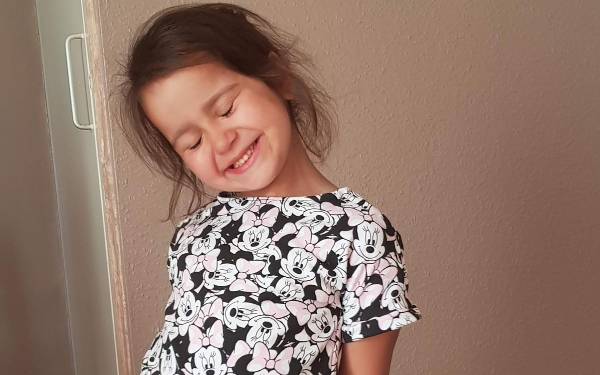
“All agencies represented by the partnership take the findings of this report extremely seriously and will work urgently together to agree a joint action plan that puts in place the local learnings from the review. Progress against this action plan will be closely monitored to ensure all partners are working together to keep children in Surrey safe.”
For Surrey County Council, chief executive Terrence Herbert said it was "deeply sorry" for the review's findings relating to the authority and had taken "robust action" to address these, including by making improvements to its front door service, which was praised in Ofsted's report of its inspection of the council earlier this year.
The authority said it had also strengthened elective home education processes, including through boosting staffing numbers, enhancing training and carrying out regular practice audits, and practice in relation to section 7 reports and court work.
Cafcass urges guidance on guardians and social workers' roles
Cafcass said that much had changed since its involvement in Sara's case, notably its prioritisation of domestic abuse, including through mandatory training and a policy on the issue, published last year.While acknowledging its joint guidance with the ADCS on cases in which the children's guardian and council social worker disagreed, it said more needed to be done urgently.
"We would like the government to consider changing practice guidance and practice directions to make clearer, the distinct responsibilities for local authority social workers and children’s guardians when work is ordered to both agencies at the same time, said the family court body.
"In addition, we welcome the recommendation to bring about better assessment for children in the context of private law proceedings where there are child protection concerns."
Government 'must go further than its existing measures'
For the government, education secretary Bridget Phillipson said some of the review's findings would be addressed through measures in the Children's Wellbeing and Schools Bill, including:- The creation of compulsory children not in school registers, which Phillipson said would "empower local authorities to better identify children who need support and protection".
- The requirement for the local authority to give consent for a child to be home educated where they are subject to a child protection enquiry or plan, and a power for councils to review existing arrangements for such children and require them to attend school if this is deemed to be in their best interests.
- The establishment of multi-agency child protection teams, with representation from social work, health, police and education, in every area.
- The duty on practitioners to disclose information that may be relevant to safeguarding or promoting the welfare of a child, to other relevant persons in certain circumstances.
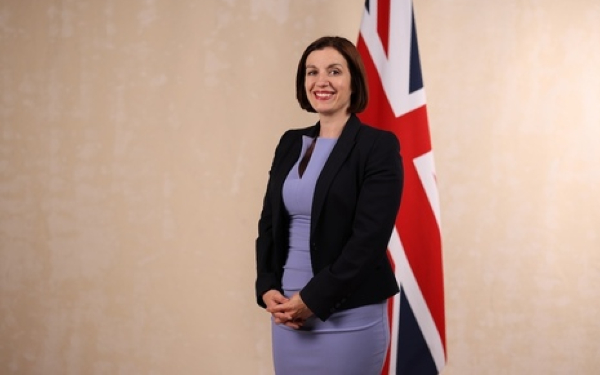
However, she said the government "must go further – as this review of Sara’s case makes plain", adding: "We will consider the findings with all the care and consideration they deserve, and we will continue to strengthen the way we protect children in this country."