

It is no secret that there is a shortage of foster carers and residential placements across the country, meaning children are often placed too far away from their families, networks and communities.
Norfolk County Council has been working hard to recruit, support and retain foster carers, while also revamping some of its in-house residential provision to make sure far more children remain in Norfolk, either with their families or within family-based care, wherever possible.
Using the Mockingbird fostering approach
The Mockingbird approach aims to provide foster families with support and create a community for them through different social activities.Often children in care do not know other children with similar backgrounds and, likewise, foster carers do not always know other foster families, and this model is designed to change that.
It also aims to help overcome potential problems before they escalate or lead to placement breakdown.
It does this by developing a cluster of seven to 10 families, referred to as ‘satellite families’, where one foster carer is the ‘hub carer’.
The hub carer will offer their home or another venue for ‘get togethers’ and organise a WhatsApp group for all the foster families to communicate with each other. Social activities such as sleepovers, laser tag or picnics can be organised for the families to get to know each other.
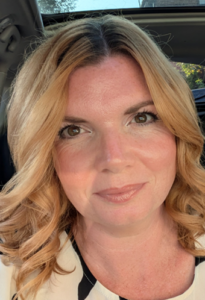
Rachel, Mockingbird liaison practitioner in Norfolk County Council, points out that children in care may not have an extended family network they can lean on, and the Mockingbird model provides a community for them.
“There are like-minded children [there]," she says. "They don't ever have to have that conversation that their family isn't quite built like other people's families, like I suspect they would encounter at school. So it's building a big family network."
Rachel has noticed that new foster carers may often begin with a support network, but it can often fall away when a child comes into the family.
“I think, in terms of [extended] family members, not that they don't want to support, but sometimes the family members do not have the skills to give the children the support they need," she adds. "Knowing other foster carers enables them to get that support with people who just get it, and they can be in an environment where people understand what they're going through."
Families are matched carefully, making sure there is a diverse range of foster families.
“If we've had a carer who's been in crisis with one of their children, they've just popped something on the group chat and said, ‘I've had a really bad day, this has happened’," Rachel adds. "And other carers will say, ‘I feel you, I hear you’."
Clinical support for foster families
As well as this, a specialist fostering clinician and a clinical psychologist are available for social workers to refer foster carers or children to.Kevin, a senior social worker who has worked in Norfolk’s children services for 36 years, says having this service in-house helps speed up the support he can offer his foster families.
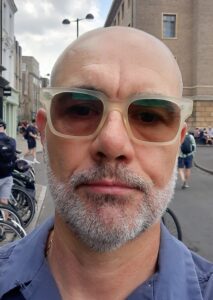
He can just make a Microsoft Teams call and set up an appointment with the psychologist, whereas previously a referral to child and adolescent mental health services (CAMHS) or another team would have been required.
“Having two people that we can go to for advice and support issues around trauma, and supporting foster carers to manage challenging behaviour or anything they're struggling with, is a radical change from where we have been over the last few years.
“We're very fortunate to have that kind of clinical and psychological support, embedded within our service.
“Sometimes what we need as social workers is the opportunity to say, ‘This is what we're seeing, this is what we're experiencing and I need to know how best to manage that', or [know] what advice to give so we can support our foster carers and, ultimately, the children,” he says.
Another way of supporting and training foster carers has been through the use of virtual reality headsets, to show them the abusive experiences children may have faced and demonstrate what they can do in response.
Reducing the number of children in care
Two of the residential homes in Norfolk were converted into New Roads hubs. The New Roads service aims to reduce the number of children in care by providing dedicated multi-agency support, family outreach and short residential stays to keep young people at home, reunify them with their family or step them down to foster care, where safe and sustainable to do so.One of the features of the hubs, which are for 12 to 25-year-olds, is that people who have applied to be foster carers can volunteer to support the children there. The volunteers have an opportunity to gain experience and build relationships before fostering any children.
In addition to supporting foster care recruitment and retention, this means less reliance on private placements, fostering or residential, therefore a cost saving for the council.
Emma, who organises respite and emergency care at one of the hubs, says it is really valuable for potential foster carers to volunteer in this way.
“We have a lady who has been volunteering with us for over two years and she's now a respite carer," Emma says. "She fosters other young people because of the support that we've given her and the experience we've given her by being able to relate to other young people in the same situation,” she says.
How Emma became a foster carer
Emma met Lizzy* (aged 16) in June 2021 and built a good relationship with her as her key worker. Lizzy had been in foster placements since she was 10 and, because of many placement breakdowns, it was hard for her to trust anybody.The plan was for Lizzy to move to semi-independent accommodation, but she wanted to be with a family. Emma knew Lizzy was not happy with the plan and was frustrated that Lizzy’s wishes could not be carried out.
Lizzy had no family that she was in contact with and one of the biggest fears she had about living alone was being alone on her birthday or at Christmas.
Coincidentally, Emma had a spare room (her eldest son had recently moved out) and, after a casual comment from a colleague, and many conversations with her own family, Emma decided to become Lizzy’s foster carer.
“They talked about having foster carers work alongside us within the hub so they could get to know the young people and if there was a connection, take them home," she says. "I just never thought of it as me, because I wasn't the foster carer coming in, I was the practitioner!
“The management within New Roads gave me the support and even the idea of [fostering] being a possibility, because I didn't even know that that was a possibility."
Lizzy is now 19 and still lives with Emma and the family despite having the option to move out. She has recently bought a car and is in a stable job, looking to gain further qualifications.
“We've taken her in as our daughter, as our sibling, like adoption, but not adoption. We've even got matching tattoos, mother-daughter tattoos!”
*name changed for anonymity
Are you interested in a career at Norfolk County Council? Check out the latest vacancies.
If you are considering becoming a foster carer, you can find more information on Fostering East.