

From the Front Line invites social workers to share their experiences on various topics and running issues within the sector to help others in their professional journey. To express an interest, email us at anastasia.koutsounia@markallengroup.com
Black representation in senior roles has historically been low relative to the front line.
In 2024, Department for Education data showed that black practitioners made up 20.5% of case-holding social workers, but accounted for just 10.2% of managers, while separate Association of Directors of Children's Services figures revealed that 5% of directors were black.
At the same time, Meera Spillett, who helped devise the Black and Asian Leadership Initiative (BALI) in 2012 to help aspiring leaders from minority groups progress into top roles, has criticised a lack of progress over the past decade.
“Many [leaders from black, Asian and minority groups] are undermined, silenced and are consistently negatively reframed," she said earlier this year. "Despite the wealth of experience they have, many are overlooked for appointment, given over generalised feedback. The BALI alumni still sees some white leaders recruiting from their white networks without due process in their appointments.”
Speaking to Community Care, two black social work leaders detailed their journey to management, the discrimination and barriers they faced along the way, and the advice they'd offer to black practitioners starting out now.
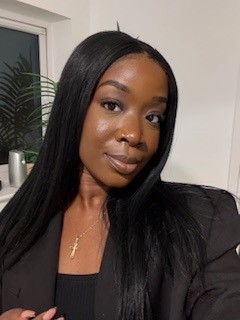
Yewande Salawe, team manager at a children and families service, qualified in 2015
When I first started, I had no real aspirations to move into management. I didn’t see enough representation in leadership to imagine myself there. It was actually my managers and colleagues who encouraged me to consider it.
I began to want to ensure there was representation in the management sector. As a young, black woman, I wanted to be the inspiration for someone that I didn't have for myself.
The need for self-belief
Three years after qualifying, I got my first management role. But I struggled with doubts, wondering whether it was the result of tokenism. Was it that they recognised that management wasn't diverse?
You don't know if you're there because you are supposed to be there, or if you're ticking a box. That was a mental challenge I grappled with.
I dealt with it by focusing on having a career plan. Many social workers don't have a career plan once they get their social work degree. Initially, I thought I would be a case holder and remain in that role until I retired. I didn't even consider that I could specialise or go into management.
So my advice for black prospective social workers would be: have an idea about what you want your future to be. Don't limit yourself.
As much as others will encourage you, you also need to have self-belief. I had to change my mindset completely.
I started proactively seeking opportunities. I positioned myself in spaces that would improve my confidence, give me the experience I needed, and also show those around me that I could actually do the job.
Dealing with microaggressions
Even with supportive managers, I sometimes felt lonely. There were occasions where I encountered professionals who weren't very emotionally intelligent when it came to understanding [the nuances of bias].
For example, I remember challenging a headteacher’s opinion, and he called me aggressive when I was just being assertive. I don't think he understood the nuances around calling a black woman aggressive. So I spoke to my manager.
But that's a challenge that black women have to deal with.
I won't lie, there have been occasions I’ve chosen not to say anything when I’ve experienced microaggressions. Sometimes it's just easier to remain silent or you might not want to make someone feel uncomfortable. So you bear the uncomfortable emotions yourself.
Sometimes you also don’t have the energy for it, because it can be quite frustrating to have to challenge microaggressions all the time.
Interestingly, as a leader, I find it easier to challenge these things when they happen to others, or when it's about like children and families. But when it's about me, I don’t always feel able to.
Reflective spaces for black social workers
I would love to see more reflective spaces for black social workers where they can share their views without judgment or having to worry about someone else’s feelings.
So if there is a microaggression where the social worker may not feel able to call it out, they have people to support them and challenge poor practice on their behalf. There should be a collective stand on issues of racism.
I know many local authorities do have groups for social workers of colour, but they’re not advertised or easily accessible. I don't know if it's routinely encouraged for social workers to attend, to share their views and to be part of discussions and planning.
Actively seeking opportunities
For black social workers starting out, my first piece of advice is to find those who have progressed and speak to them.
Don’t limit yourselves. Social workers should dream big and have aspirations. Push for what you need to get there, whether that’s mentorship or being coached.
Lastly, you should actively ask for these opportunities. Many believe they can only apply for management or leadership positions whenever a job opening pops up. No, you can always ask in supervision for career development opportunities to be part of your plan. Ask: “What can I do to get to this place? What experience do I need?”
Don’t start thinking about progressing when you’re fed up with where you are. Start thinking about those career opportunities early on, so when the time comes, you are ready.
Nadine Boyne, children's social worker, qualified in 2011
I've always been an ambitious social worker. I moved around within the same local authority, often applying for jobs I wasn’t yet fully qualified for.
What that did for me was make my managers notice I wanted to progress. I had a couple of managers who always encouraged me and saw potential in me that I hadn’t yet recognised in myself.
Eventually, I applied for my first senior management role. I didn’t expect to get it, but I went for it anyway. I’d only been in the local authority for six months and didn’t have much of a reputation yet. But I did get the job, and I was thrilled. It was a highly sought-after role with eight other applicants.
How racist experience sowed self-doubt
Unfortunately, one practitioner from that service said quite openly in the office that I had only been appointed because I was black. It was one of the first times I had experienced such blatant racism.
I was so mad at first. They said it as casually as, “Oh, I'm going to get Chinese for dinner tonight”. It made me really angry because I knew I had a really strong CV. Then I started to really doubt myself.
I felt I had to prove myself, which was a struggle because I was also going through a divorce. I was under fire both personally and professionally.
There was also no handover, no mentorship and no real guidance in the new role. It was my first senior management position, yet I had no training or support. It just felt like I didn't belong there. I was literally the little black girl sitting quietly in these big meetings, because I felt so far out of my depth.
I did that for about 18 months and then I left.
Joining a black leaders' programme
Joining BALI (the Black and Asian Leadership Initiative) was a massive part of my journey. I joined after getting the senior role, when I heard about a course that supported black leaders. Being in a room full of people who looked like me — who understood — was transformative. It reminded me that I wasn’t alone and that my experiences were, sadly, not uncommon.
I became intentional about learning. Before BALI, I didn't really understand the history of slavery, how old narratives shape present systems. It was a beautiful learning journey for me that helped me root into my blackness and let me know my feelings were valid.
Understanding context helped me extend some grace while still challenging assumptions. It allowed me to have those difficult conversations and to be curious rather than defensive.
'You have to have fire in your belly'
My biggest piece of advice is to understand yourself - your strengths, your values and how you want to present yourself as a leader.
You should also listen to what feels right for you.
A manager once told me you should remain a frontline social worker for five years before moving to a management role. She was very old school. I ignored that advice and applied anyway after two or three years and got a supervising role.
Confidence is definitely key. You must feel like you’re good enough. If you don't see anybody that looks like you in those roles, you're going to think it's impossible. You have to have that fire in your belly to say: “I'm going to be the first one then."
The need for equitable support
To support black social workers, the system needs to offer equitable support.
When I’ve facilitated on BALI, some participants would initially say, “Why have I been sent here? Because I’m black, I’ve got some sort of deficit.” By the end, they'd say, “Oh my god, I'm so glad I'm here. This was exactly what I needed."
There should be opportunities available, whether that be going to BALI or receiving mentoring. Managers should have clear pathways to help their staff progress, even if that means supporting someone to move to another local authority.
But I also think practitioners should be intentional about their careers. Seek out the right mentors. We don’t talk enough about the importance of mentorship.
Thinking ahead - about the next one, three or five years - can help prevent burnout, because it’s easier to stay motivated when you can picture the future.
Celebrate those who've inspired you

Do you have a colleague, mentor, or social work figure you can't help but gush about?
Our My Brilliant Colleague series invites you to celebrate anyone within social work who has inspired you – whether current or former colleagues, managers, students, lecturers, mentors or prominent past or present sector figures whom you have admired from afar.
Nominate your colleague or social work inspiration by filling in our nominations form with a few paragraphs (100-250 words) explaining how and why the person has inspired you.
*Please note that, despite the need to provide your name and role, you or the nominee can be anonymous in the published entry*
If you have any questions, email our community journalist, Anastasia Koutsounia, at anastasia.koutsounia@markallengroup.com