


The murders of Arthur Labinjo-Hughes and Star Hobson demonstrate the need for child protection practice to be handed over to specialist multi-agency teams of expert practitioners.
That was the verdict today from the Child Safeguarding Practice Review Panel's inquiry into the lessons from the killings of six-year-old Arthur and 16-month-old Star, in each case at the hands of the partner of one of their parents, with those parents' complicity.
In Arthur's case, the panel found that professionals in Solihull had only a limited understanding of what life was like for him, did not always hear his voice, did not challenge their initial framing of his father, Thomas, as protective, and did not take the concerns of his wider family seriously.
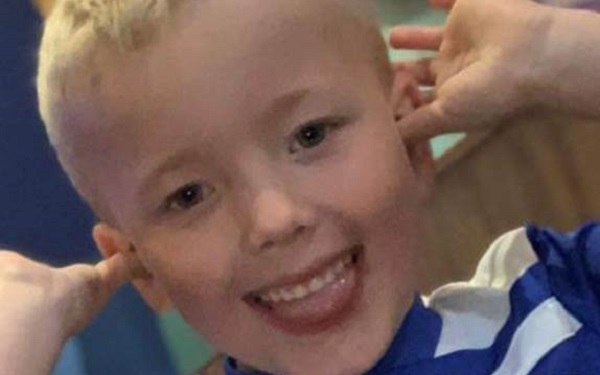
It said children's social care's failure to convene a multi-agency strategy discussion in April 2016, after Arthur's paternal grandmother reported bruising that she felt may have been carried out by his stepmother, Emma Tustin, was not appropriate and undermined agencies' response. Last year, Tustin was convicted of murdering Arthur, who died from a single blow to the head, in June 2020, with Thomas Hughes convicted of manslaughter.
'Systemic flaw in multi-agency working'
Overall, the review found a "systemic flaw in the quality of multi-agency working", with "an overreliance on single agency processes with superficial joint working and joint decision making".The panel found a number of similar findings in the case of Star, who was murdered by her mother's partner, Savannah Brockhill, in September 2020, with her mother, Frankie Smith, found guilty of causing or allowing her death.
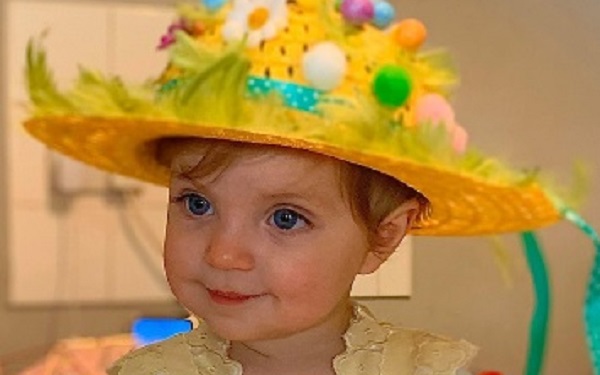
It said that professionals in Bradford had limited understanding what life was like for her, did not listen to wider family members and that the responses to safeguarding referrals "were significantly weakened by the lack of formal multi-agency child protection processes".
In addition, it found an inadequate response to concerns of domestic abuse towards Smith from Brockhill and that assessments by children's social care "were not fit for purpose", at a time of "turmoil" within Bradford's children's social care service, in 2020.
Two key lessons
The panel, which is also responsible for analysing serious child protection incidents reported by councils, said that what happened to Arthur and Star were not isolated incidents and their deaths reflected wider problems in child protection practice. In particular, it identified two key lessons from the cases and its wider learning from safeguarding concerns:- Multi-agency arrangements for safeguarding children are too fragmented, with inadequate information sharing making it "extremely difficult" to build and maintain an accurate picture of what life is like for the child.
- A need for "sharper specialist child protection skills and expertise, especially in relation to complex risk assessment and decision making; engaging reluctant parents; understanding the daily life of children; and domestic abuse".
Specialist child protection units
Among a number of recommendations designed to tackle these issues, the review called for the creation of dedicated multi-agency child protection teams in every area, based within local authorities, but made up of secondees from the police and health as well as social workers.The units would be responsible for convening and leading strategy discussions, carrying out section 47 child protection enquiries, chairing child protection conferences, overseeing, reviewing and supporting child protection plans, recommending court applications and advising other teams and agencies on child protection.
It said this arrangement would ensure fully integrated multi-agency decision making throughout the child protection process, delivered by those with the appropriate skill and expertise.
Panel chair Annie Hudson said: "At the moment, each professional who comes into contact with a child holds one piece of the jigsaw of what is happening in a child's life. Our proposed reforms would bring together experts from social work, police and health into one team so that they can have a better picture of what is happening to a child, listening carefully to relatives' concerns and taking necessary actions to protect children."
Backing for expert practitioner role
In relation to social work, the panel backed the recommendation of the Independent Review of Children's Social Care, in its final report, published on Monday, to establish the role of expert child protection practitioners, obtained in future by passing a five-year assessed early career framework.It also accepted the care review's proposal that such expert practitioners co-work cases with family help teams to avoid fragmentation. Under the care review's blueprint, these teams will have been working to support the family prior to child protection processes being initiated - but the panel stressed that the child protection units should have decision-making authority in such cases.
Unit police and health representatives would need to be well-connected to their employing agencies and maintain their professional development to ensure they could co-ordinate the involvement of their professional colleagues in cases, enabling effective multi-agency working, it added.
The recommendation matches a proposal put forward in a piece for Community Care last week by former government safeguarding adviser Sir Alan Wood. This drew significant criticism from some social workers and academics, who argued that inadequate resources and excessive workloads - not lack of skill - explained child protection challenges and that Wood's proposal was not rooted in evidence.
'An extremely difficult and complicated task'
However, in an interview with Community Care, Hudson said: "What we see very strongly in the stories of Arthur and Star is, perhaps inevitably, that what parents, parents’ partners and carers say cannot always be taken at face value, and the skill of getting underneath what people are saying is an extremely difficult and complicated task."But the way in which we organise our child protection systems does not enable professionals taking some of the most difficult public service functions to do those to the best of their ability."
She added that, while all social workers in children’s services needed to have a good understanding of safeguarding and child protection, "there are additional skills and attributes that you need when you are undertaking this very difficult work of investigating abuse and overseeing the work to protect children following an investigation".
'Social work career development neglected for too long'
In relation to the panel's backing for the care review's early career framework proposal, Hudson -formerly chief executive of the defunct College of Social Work - said: “I support those recommendations and that direction of travel and I believe strongly that for too long we haven’t offered social workers the opportunity of clearly structured and appropriately resourced career development."If you look at teaching, medicine, nursing and policing, those career development journeys are well established. We haven’t had that in social work and I think that will be really crucial in terms of retention of social workers because it gives them the opportunity to develop."
The panel's other recommendations were for the government to:
- Establish national multi-agency practice standards for child protection, capturing the best available evidence of what works when working with children and families.
- Set up a national child protection board involving representatives from central government departments, local government, the police and health, to ensure greater co-ordination of child protection policy and performance management.
- Strengthen local multi-agency safeguarding partnerships, in line with the recommendations of the care review, to address issues including lack of senior representation, inadequate oversight of practice and problems agreeing funding levels.
- Increase the role of multi-agency inspection in holding partnerships to account, strategically and operationally, potentially reducing the number of single-agency inspections as a result.
- Fund peer support for safeguarding partners, overseen by the panel itself, in order to share learning.
- Convene a task group to improve the way data is used by professionals to better protect children.
- Promote the way safeguarding partners work with domestic abuse services and ensure professionals in their areas have adequate knowledge of the topic. The panel itself will produce a practice briefing this summer on safeguarding children in families where there is domestic abuse.
Zahawi: 'We must waste no time learning from findings'
It will give a fuller response to the care review, alongside an implementation plan, later this year, and today education secretary Nadhim Zahawi said this would also incorporate its full response to the panel's report.However, in a written statement to the House of Commons, Zahawi said he was "committed, with colleagues across this House, to acting on [the panel's] recommendations", and that "system change on a national scale is needed".
In a separate statement, he added: “We must waste no time learning from the findings of this review – enough is enough. I will set up a new child protection mnisterial group, a first and immediate step in responding to these findings, before setting out a bold implementation plan later this year to bring about a fundamental shift in how we support better outcomes for our most vulnerable children and families.”
In its response to the panel's report, the Association of Directors of Children's Services said there was learning for all local areas and government from it.
"For example, sharing and piecing together timely and relevant information about children and their circumstances is key to getting a full picture of a child, their needs and the risks posed to them, as is securing enough resources from all safeguarding partners for child protection work," said president Steve Crocker.
"Domestic abuse is the most common reason why children come to the attention of children’s social care, the learning that will come from the [panel's] review on domestic abuse in the summer will be a helpful addition to our understanding of this complex issue."
Directors cautious on specialist units
On the panel's proposal for specialist units, Crocker expressed caution, adding: "We will need further details to understand how such units would work in practice and the relationship with the wider system of children’s social care, ensuring that lessons are learnt from previous attempts to implement similar models while identifying any potential unintended consequences for children, families and our staff."Referencing the recommendations of the care review for investment to reform children's social care and shift its focus towards family help, he said: "Investment in both early help and child protection work is needed to shift the dial towards supporting more children and families earlier on, before they reach crisis point and we hope that the government recognises the call from the independent review of children’s social care that investment of £2.6bn is urgently needed to re-set the system.”
'Devastating loss'
Hudson, Zahawi and Crocker all highlighted the horrific abuse Arthur and Star suffered.Hudson told Community Care: “I think it’s really important to state what happened to these two children is very much at the heart of what we’re saying in this review and important to recognise the devastating loss to family members and others who cared for them."
Zahawi said: “Nothing is more tragic than the death of a child, but when that child dies as a result of abuse or neglect it is incomprehensible. The deaths of Arthur Labinjo-Hughes and Star Hobson appalled the nation and highlighted the urgent need for action and change.
Crocker said it had "been difficult to read the harrowing details of what Arthur and Star endured in their short lives".