

A pregnant teenager whom Ellis supports as a social worker in children’s services has just asked Ellis to be with her when she gives birth.
It is a big deal because a few months earlier, Ellis was struggling to build a relationship with the-mother-to-be, let alone be someone with whom she was willing to share such an intimate part of her life.
But this is one of many examples of how North East Lincolnshire children’s services are actively encouraging their workforce to build trust and develop strong relationships with children and families.
Since the arrival last year of a new leadership team under director of children’s services Ann-Marie Matson, social workers have been enabled to maximise the time they spend with children and families and strengthen those vital connections.
“We know that you can’t just go into someone’s house and ask them a list of questions and expect them to tell you,” says Katy, a practice supervisor in North East Lincolnshire’s integrated front door team.
“We are giving practitioners the time and the space to build those relationships. Caseloads have reduced so that more meaningful work can be done, and the teams have been restructured to support this,” she adds.
Supporting social workers
There are nine teams within North East Lincolnshire’s children’s assessment and safeguarding service, where Ellis works, with recruitment in progress to fill a 10th team. Prior to the restructure there were fewer teams with more social workers in each, Katy explains.“In essence, reducing the numbers in the teams means the practice supervisors can offer more management oversight and ensure supervision is consistent and reflective and benefits the social workers,” she says.
“This will ensure they [social workers] feel supported and focused and have clear direction around what they need to achieve, to motivate, empower and create change for the children and families they are working with.”
And, says Katy: “The quality of relationships between the front door team and partners means that these agencies are exhausting all options before referring families to children’s social care.”
A recent children’s services move from Cleethorpes to Grimsby has also been a positive. “From a front door perspective, more people are dropping into the Grimsby office than before, and that is important because we want them to have a connection with us,” says Katy.
Training opportunities
Staff at North East Lincolnshire use a practice model that combines elements of relational and strengths-based approaches to build rapport and provide support to children and families. The onus is on practitioners to build trust and work in the best interests of the children and families.But key to that is ensuring practitioners receive continuous learning and development, which North East Lincolnshire children’s services outline in their new workforce development strategy.
Nikki, deputy director for practice standards and principal social worker, says: “The workforce development strategy is not just a document. Its alive and we’re refreshing our relationship with local universities and have increased capacity to support student social workers, social work apprentices, newly qualified social workers and practice educators.
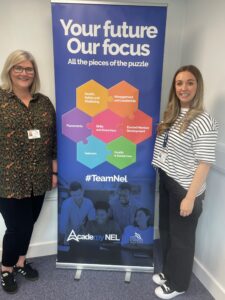
“We’ve taken a whole new approach to supervision training and are expanding our learning and development offer via our Academy NEL. We have lots of different training opportunities and resources, including in leadership and management, available through Academy NEL. It’s a great time to join us as a social worker with all that we have to offer.”
Katy explains that the new leadership team has created a clearer structure for social workers joining the service, which maps out how practitioners are supported along their career journey.
“Social workers feel more supported because of greater access to supervision and training opportunities,” she adds.
Ellis, who recently completed her assessed and supported year in employment, agrees. She has been able to take up training opportunities irrespective of her position within the service.
“For a long time, it had to be that you were at a certain level [in your career] to do specific training, but that has changed. Now, for example, I was offered the chance to take up achieving best evidence training [relating to interviewing children as vulnerable witnesses] even though I was a newly qualified social worker,” she says.
“When you see a local authority pouring that knowledge and resource into you, it gives you a purpose to stay and give back.”


